Designers, retailers and the media are all touting the hottest fabric trends of Neoprene and Scuba Knit. Store displays promote colorful, sports style garments. Online fabric retailers gush over their Italian import Neoprene Scuba knits. Every fashion mag cover features Neoprene, Scuba somewhere.
The labeling of these garments and fabrics includes:
- Neoprene
- Neoprene Scuba
- Neoprene Scuba Knit
- Scuba
- Scuba Knit
- Scuba Knit made in a Neoprene knit.
Whaaat? Never heard of any of these? Not surprising as Neoprene has only been on the fashion scene for the past 10 years, Scuba Knit even less.
So what’s the problem? Is there a problem?
The problem is none of the above terms are interchangeable (Neoprene Scuba Knit and Scuba Knit made in a Neoprene knit are just plain false-there are no such animals.) Each has it’s own specific features that affect the use and wearability. Yet retailers combine the terms, most likely hoping the consumer will recognize at least one and jump on the trend bandwagon.
What is Scuba Knit?
Britex says it best, “Scuba knit or apparel neoprene is similar to ponte knit in weight and feel; an easy to sew, two-way stretch double-knit with a soft smooth texture and beaucoup body.”
Scuba Knit–the apparel Neoprene
The main difference between Neoprene and Scuba Knit–foam core: Neoprene has it; Scuba Knit doesn’t.
Cross section of Neoprene with foam core center.

Cross Section of Neoprene
Cross section of a Scuba Knit; a double knit

Cross Section of Scuba Knit
The following information will make you an educated consumer. As Sawyer Brook Fabrics says, “Whenever choosing a fabric, it’s important to have fiber knowledge to help you predict the behavior of the fabric that you purchase.” This is true for the sewist as well as the RTW consumer. Read on.
RTW Scuba Knits
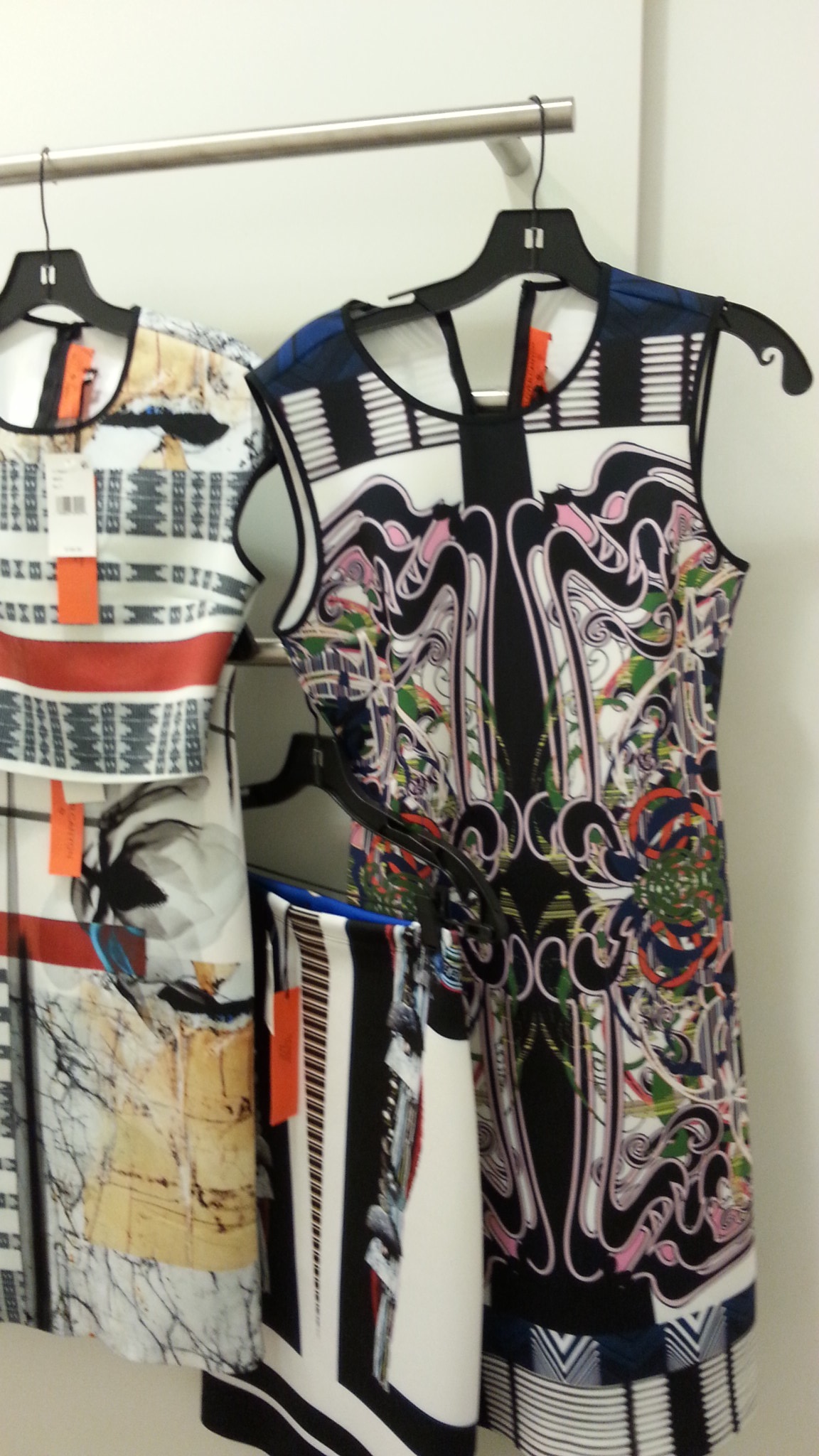
Below is a 2015 photo of a store display at Saks Fifth Avenue in Palm Springs, CA. This is from Clover Canyon, a LA company whose signature is the neon-hued, form fitting (think Scuba dive wear) RTW. And, a company flagrantly mislabeling their fabric. The garments pictured below are labeled “Neoprene, Scuba Knit.”

Clover Canyon Scuba Knits
Trust me, none of Clover Canyon garments have any Neoprene. Did all the tests–the touchy-feely, inside out and upside down, tried them on and have the dressing room pictures.
Dresssing room try-ons
As a Scuba Knit the prints are terrific and am hoping some manufacture overruns will show up in a fabric retailer shop. (Clover Canyon is made in LA so put a bug in your favorite retailer’s ear.)
More RTW Scuba Knit
Tahari also had lots of Scuba Knit garments but with a looser fit and a more subtle color way. This example is a mid-weight fabric so the fabric skims the body; see how the left sleeve does not drape, even on a hanger display.

This dress uses lapped seams and darts as the knit does not ravel and a lapped seam reduces bulk. A design element in this particular dress is the separating zipper applied on the outside of the garment, which also reduces bulk, and the mesh fabric right shoulder and sleeve.
Another Tahari design in a plus size. Scuba Knits do not need to be form fitting. From trying on RTW, I find the beefy weight prevents show-through on the form-fitting garments. No worries about OPL.
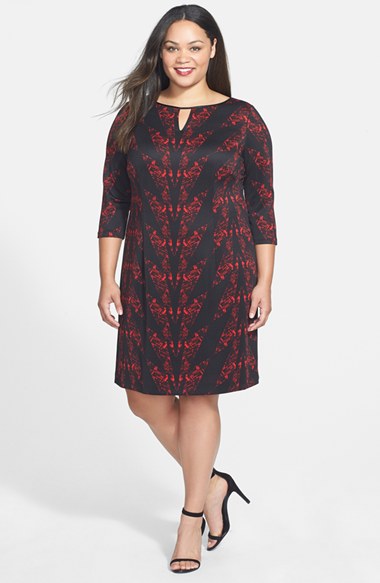
Scuba Knit Sheath Knit in Plus Size

Scuba Knit made with conventional seams
Scuba Knit Features
- double knit, very fine filament yarns in small gauge knit
- content–polyester, Lycra/Spandex, may also contain rayon, acetate
- various weights-light, medium, heavy
- smooth, silky hand; heavier weights may feel spongy, beefy
- fabric does not drape close to body due to dense knit
- does not ravel
- does not wrinkle
- good stretch recovery
- travels well
Scuba Knit Samples
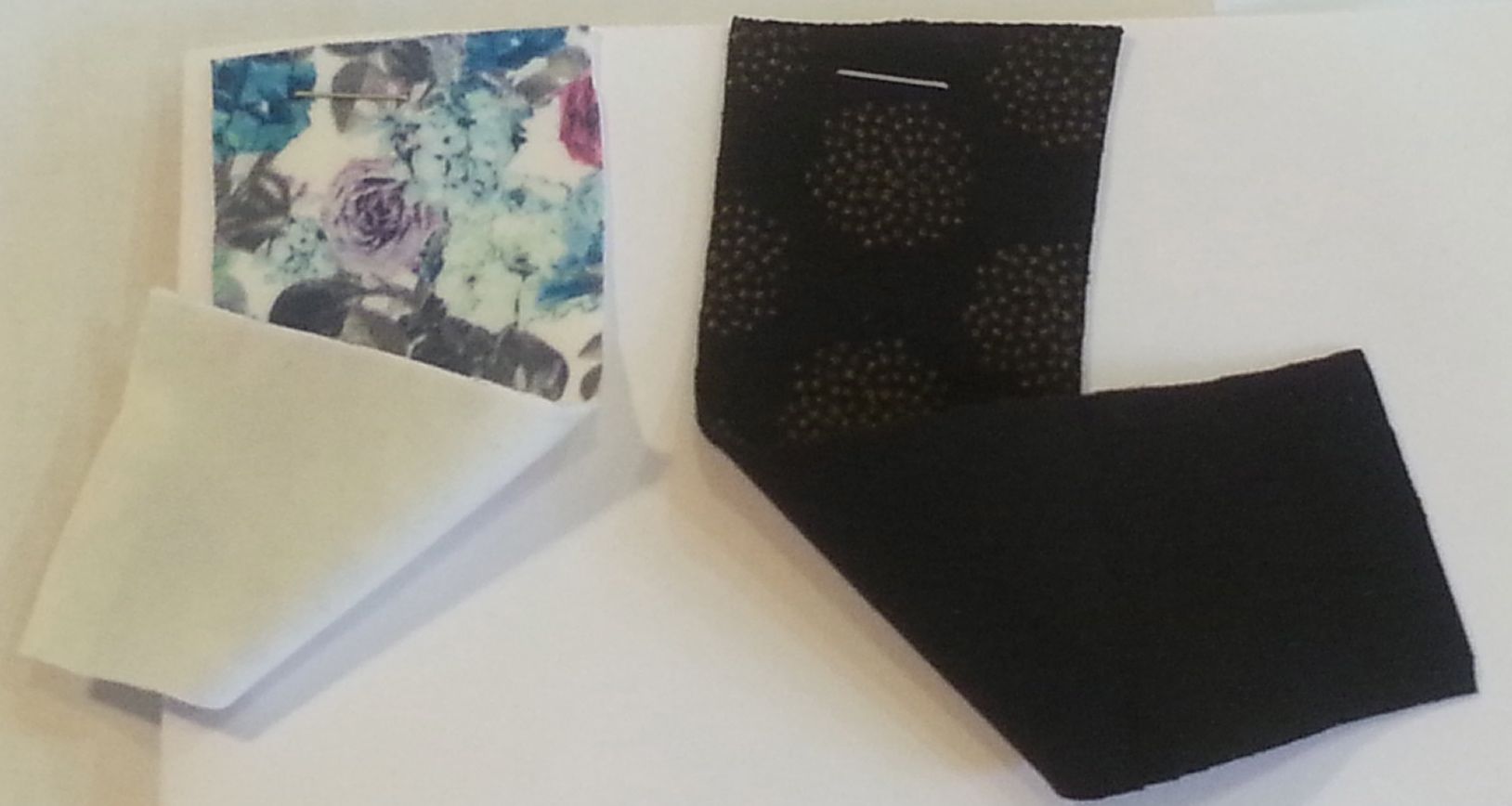
Scuba Knit Samples
Scuba Knits are available in many colors, both solids and prints. The fabrics and garments I have seen have a solid color back to a printed right side.
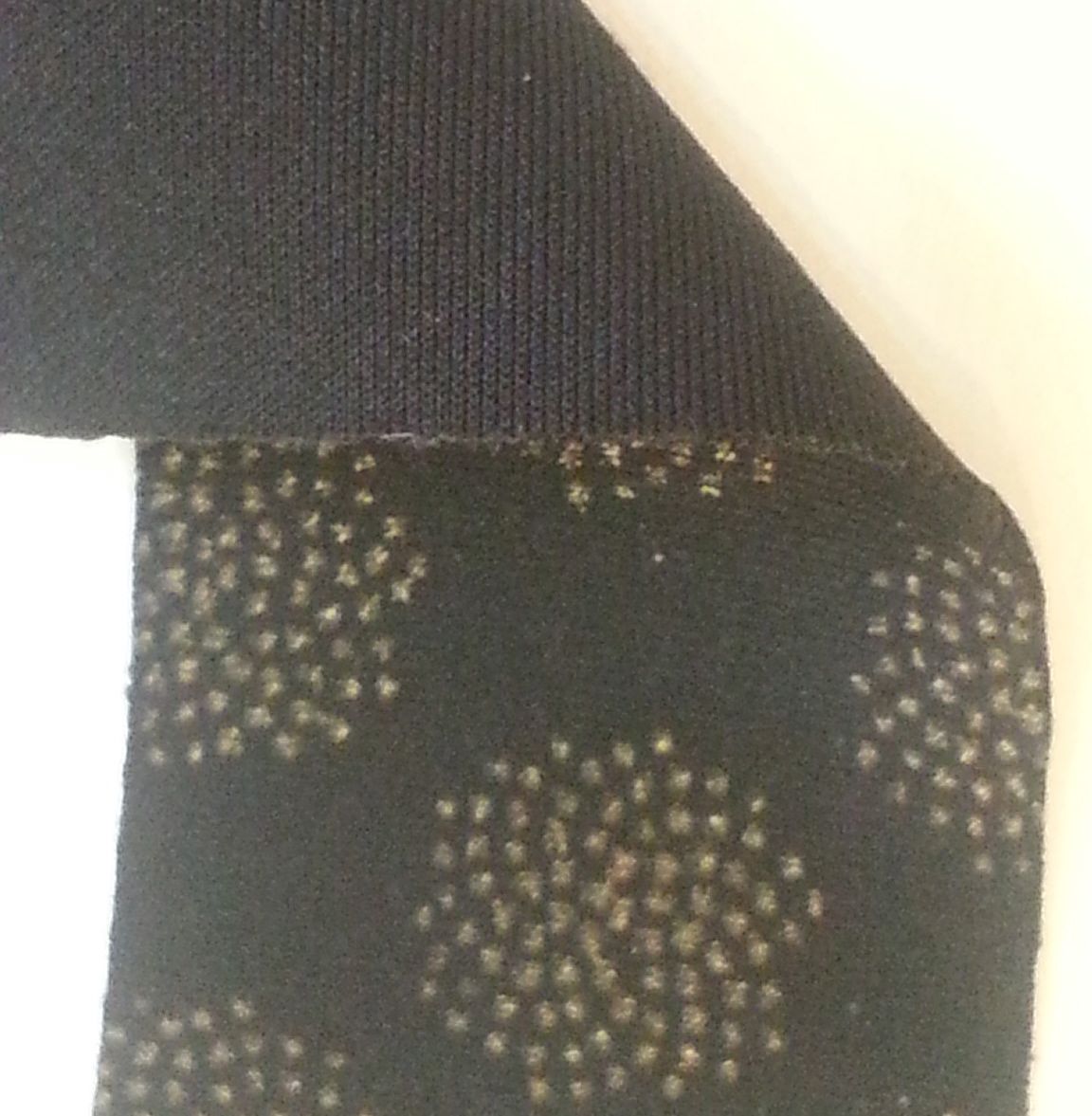
Scuba Knit, right and wrong side showing ribs of double knit
How to Sew Scuba Knits
- use needles and stitches suitable for any knit fabric
- seam finishes not necessary
- heavy weight knits suitable for lapped seams which reduces bulk and can be a design detail
- Sample, Sample, Sample
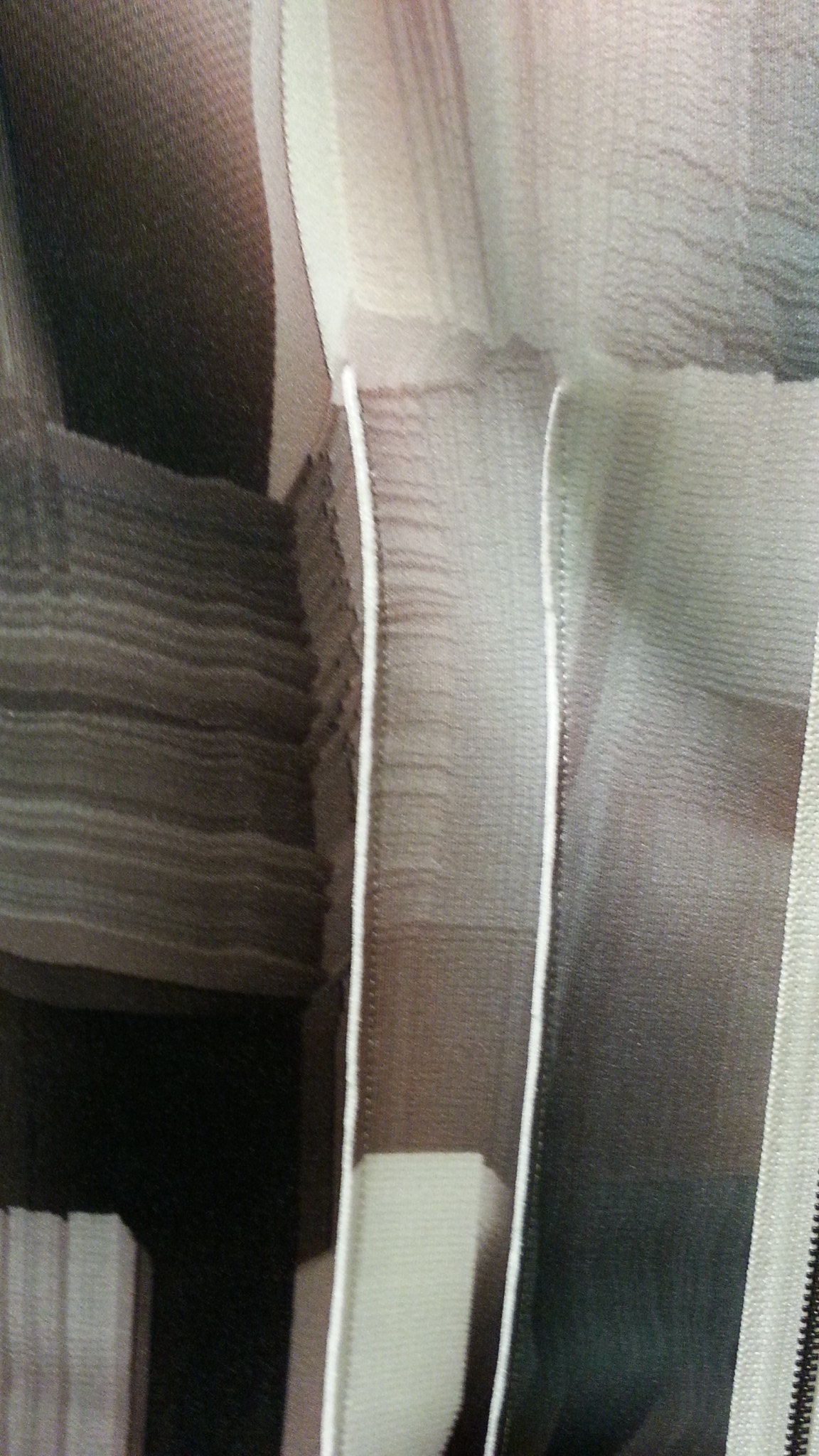
Closeup of lapped seam double dart; white to left of stitching is the wrong side of fabric
Ponte Knits
Ponte knits have been around for decades and may still be referred to as Ponte di Roma due to the roman bridge knit construction. The original Ponte knits were 100% polyester; some still are. The newer Ponte may contain Lycra/Spandex and are now available in color patterns.
“A fabric made in a double knit construction, usually produced in one color rather than color patterns. This plain fabric has an elastic quality with a slight horizontal line. The fabric looks the same on both sides. Weft knitted, interlock based, double jersey structure. Means ‘roman bridge’ which is suggested by the arrangement of loops. The fabric looks the same on both sides.” Textile Glossary
Ponte and Scuba Knits are both double knits; the main difference being the hand, feel, drape of the fabric.
Sidebar: do not rely on a fabric description. Research has found many fabrics labeled ‘Ponte’ are actually wovens. By definition, a Ponte is a double knit. Order a sample, most are free or a nominal fee.
Ponte Knit Features
- double knit
- ‘textury’ in feel probably due to the use of texturized yarns
- cool, dry hand
- available in light, medium and heavy weights.
- ravel and wrinkle resistant
- good stretch recovery
Here ends the three-blog saga of Neoprene, Wearing Neoprene, Scuba Knit, Ponte. Do hope it is helpful.
Let’s hear your Scuba Knit/Ponte experiences and please share your Sources by leaving a comment.
Apparel Neoprene Fabric Sources
Britex
Emma One Sock
Sawyer Brook Distinctive Fabrics
B&J
Ponte Knit Fabric Sources
Marcy Tilton
Mood Fabrics
Vogue Fabrics
Sawyer Brook Distinctive Fabrics
Related Posts
Wearing, Sewing Neoprene–Yes? No? Maybe?
Is it Neoprene or Scuba Knit? Should I Care?












![Saving]](http://www.neucarol.com/wp-content/uploads/2016/03/images.jpg)